Winter 2026 – ERA XCOM Digest
Click on the “+” to expand each article.

Click on the “+” to expand each article.
 By Cameron English, CPMR, ERA SVP of Industry
“We hold these truths to be self-evident”— words that declared independence for a nation—still resonate today for an entirely different constituency: the manufacturers’ representatives tasked with bridging the gap between customers and their electronic component manufacturers in an era defined by speed, complexity and escalating expectations.
In today’s hyper-accelerated technical environment, the success of a sales rep is as dependent upon relationships, territory coverage and customer access, as it is the tools to support the customer engineering development. A manufacturer’s ability to empower reps with the right tools, the right information and the right resources at the right moment, will determine the outcome of the development of the program.
Gone are the days when design cycles were measured in quarters or years. Engineers now work in weeks—or sometimes days—driven by competitive pressure, rapid prototyping technologies and the demand for frequent product updates.
• Immediate access to samples: Not optional anymore. If an engineer can’t vet/ review and test it, they won’t spec it.
• Customization: The competitive differentiator. Today’s design engineers expect components that aren’t just adequate— they want parts that match their exact electrical, mechanical or environmental needs.
• GUI-Based modeling tools: Engineers expect them. Reps need graphical user interface modeling tools that allow engineers to simulate performance and downloadable models for EMI behavior, thermal profiles, mechanical fit, firmware integrity and electrical characteristics. In the fast-paced development world, nextgeneration design engineers have gravitated toward the distributor entities that offer stock and quick access to data sheets and 3D models (STEP files). When the design needs a deeper understanding of the intricacies of technical development, engineering customers are going to reach out to your reps.
In this stage of the program technical development, your reps need a suite of tools that will allow them to fill in and help those engineers understand the nuance of the design parameters. The following list of resources should be the goal of suppliers to provide their sales team:
• Graphical user interface modeling tools that allow engineers to simulate performance and downloadable models for EMI behavior, thermal profiles, mechanical fit and electrical response.
• Development kits offered at no charge or at a subsidized rate
• STEP files — mandatory for 3D and automated design
• Access to 3D models for every part • Real-field support
• Comprehensive sample kits
• Fast access to FAEs, PMs and engineering staff
A modern declaration of partnership includes a customer hyper responsive model, with minimal qualifiers to access the resources needed. The relationship between the rep and the manufacturer corporate management needs to be so elevated, it is based on trust and respect. When the rep speaks on behalf of the customer perspective, a rep partner needs to be treated as part of the “inner circle” of the organization. Does this sound idealistic? You bet, but this level of alignment should be the goal.
In one recent personal experience, I had a great opportunity arise at a major customer. My key engineer called and advised that they were considering the development of a custom technical component. Of course, I was motivated to find the right solution. I knew this particular part was a bit out of the envelope of this particular manufacturer that I represent, but after contacting them, they stated that they had something in development, but would need an NDA to get the technical details. After explaining that the customer was reviewing over six different potential sources, and that the NDA requirement would probably not be met with enthusiasm by this customer due to the early analysis nature of the stage of the program, the supplier relented. Question: why are we trying to make the introduction of our technology difficult?
I recall an entertaining example of how unintended organizing of the process within corporations can become roadblocks to business development. In the movie Office Space, the “right sizing” team is interviewing the “engineering liaison” and when they ask him what he does, he says he brings the engineering documents from the sales to the engineering department. They ask, “Why doesn’t sales just deliver them directly?” The engineering liaison says, “Engineers are not good with dealing with sales or customers.” “So..what do you do here?” “I told you, I deal with the engineers so the salespeople and customers don’t have to!” An iconic scene that shows how layered some organizations can become.
Does your organization have an open-door policy to allow your rep team access to the technical and product management staff? If not, why? Overly hierarchical structured organizations are prioritizing policy over productivity. If one major piece of business is lost due to an overly complicated internal process, that process is too costly to maintain. In my example of a major opportunity unnecessarily burdened, one could suggest that the risk of showing a potential future product was the issue. These are examples of the unnecessary disconnects field sales struggles with.
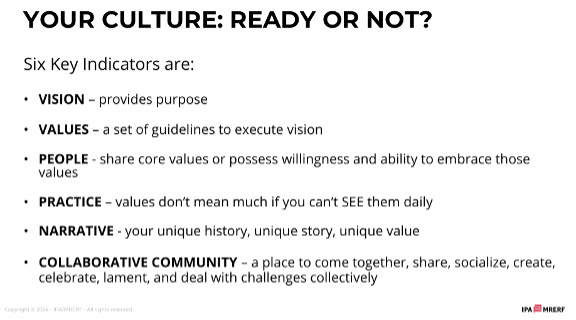
Figure 1. Your workplace culture. (Source: MRERF/IPA)
What does an “A” supplier look like from the rep’s perspective? (See Figure 2) I borrowed this list from Bryan Shirley’s MRERF presentation that was tailored for manufacturers to consider when working with their reps. Shirley is a well-respected consultant to both reps and manufacturers, promoting the rep function in the electronics industry. Shirley makes the case that a culture that is rep-friendly includes certain things that need to be “self-evident” to your sales partners. Take a look at this list and think about how it aligns with your organization.
Once your culture can reach a level of integrating your rep partners effectively, and the culture encourages collaboration, what should you provide as a top performing supplier to your rep team?
We hold these truths to be self-evident: that great manufacturers and great reps succeed together; that design cycles wait for no one; and dynamic support—fast, flexible, technical and digital—is the lifeblood of winning in today’s electronics industry. Suppliers should look at development kits and samples as an investment in sales. Fast response and proactive stocking of key items that customers will need to proof viability of technology. An emphasis on productivity and collaboration, versus constant challenging and pushing. What you do should be prioritized around what the customer demands, not what the organization feels is priority.
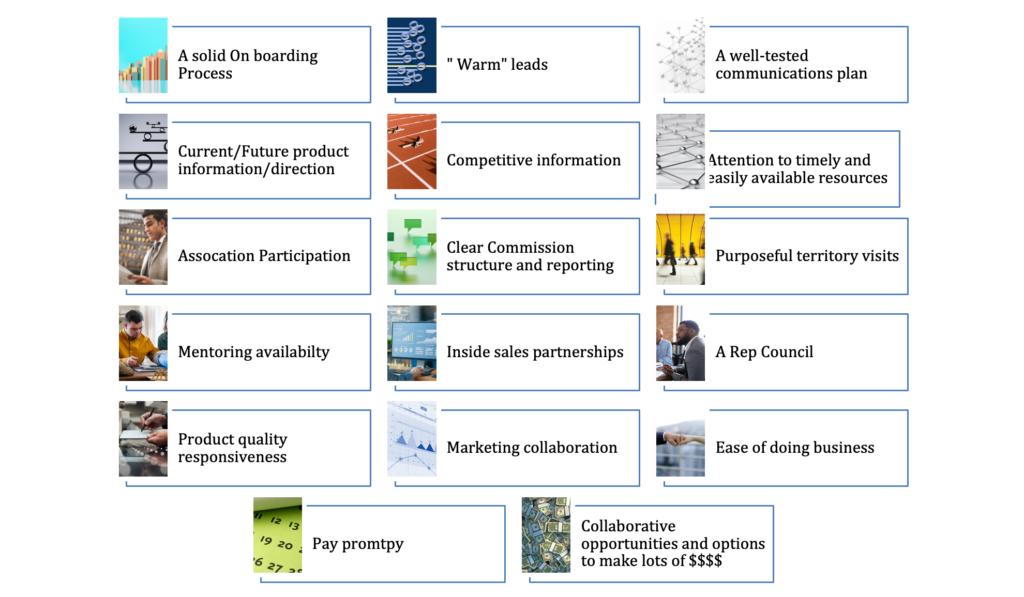
Figure 2. What an “A” principal provides.
Too idealistic you say? Maybe— but in my experience, the closer you come to a system of support, collaboration and integration of your rep team, then better results you will achieve.
 ERA: Powering the human connection in a high-tech world
By Lori Bruno, CPMR
In a 2026 business landscape increasingly dominated by algorithms, AI and quantum computing, ERA stands as the essential guardian of the industry’s most valuable asset: the human connection. As the premier trade organization for our industry’s “holy trinity”— manufacturers’ representatives, manufacturers and distributors—ERA provides the bridge where high-tech innovation meets high-touch relationships. We believe that while technology provides the tools, it is the strength of our partnerships that provides the “juice” for true business success.
Joining ERA is more than a membership; it is a strategic necessity for those who refuse to be left behind. We empower our members to be “Connected by Design” through a robust ecosystem of professional resources:
• The ultimate networking engine. Whether at the national conference in Austin or through local chapter events, ERA offers the only dedicated space where the entire sales channel converges, giving you direct access to the decision-makers who move the needle.
• Industry-leading professional development. We ensure you don’t just keep up with market shifts—you lead them. Members gain access to expert legal, tax and HR consultations tailored to the rep model, as well as elite certifications like the CPSC (Certified Professional Sales Consultant) and CPMR (Certified Professional Manufacturers’ Representative).
• Cutting-edge insight. From the Representor magazine to ERA LIVE sessions, we provide the intellectual capital needed to navigate a rapidly evolving marketplace.
This year marks a pivotal moment in our history as we celebrate a fond farewell and a fierce welcome. We honor the incredible legacy of our outgoing CEO, Walter Tobin—our GOAT—who breathed fire into this association and revitalized the three pillars of our membership over the last decade. As we bid him a grateful adieu, we are thrilled to welcome our new CEO, Ed Smith. Ed is already building on this massive momentum, committed to expanding our membership and delivering even deeper tangible value to every firm we serve.
The future is bright, but it must be built together. If you are not yet a member of ERA, now is the time to step out of the daily grind and into a community designed for your success. Put on your power suit, sharpen your vision and join us. Get connected, or risk falling behind.
 Building a strong RSM-rep relationship
By John Guetens
Within the electronic components industry, few relationships are as critical to sustained success as the one between the supplier’s regional sales manager (RSM) and the manufacturer’s representative. This relationship serves as the primary bridge between supplier strategy and market execution. When aligned and well managed, it drives growth for both parties. When misaligned, it can limit opportunity, slow momentum and undermine long-term results.
The role of the RSM has evolved significantly in recent years but so has the role of the manufacturers’ representative. Today’s RSM is expected to be more than an administrative contact or performance reviewer — he/ she provides direction, product knowledge and focus to ensure supplier objectives and rep execution remain aligned in a competitive marketplace. At the same time, effective representatives are expected to actively engage, prioritize and execute in ways that reflect both local market realities and supplier expectations. The strongest relationships recognize this as a shared responsibility.
At the center of the most effective RSM-rep relationships is trust. Trust is not assumed; it is earned through consistent behaviors and reliable execution on both sides. In my 20 years of experience on the supplier side of the equation, both in regional and corporate management, the most successful partnerships share several core characteristics.
Communication is foundational. Strong relationships are built on regular, structured and purposeful communication. This includes consistent performance reviews and updates, as well as open dialogue around expectations, priorities, challenges and changing market conditions. Effective communication is not one-directional; both RSMs and representatives must contribute candidly and consistently to maintain alignment across the territory.
Accountability is a shared responsibility. Clear goals, defined metrics and mutual ownership of outcomes form the basis of effective accountability. High-performing relationships focus on both activity and results, with expectations clearly understood and commitments honored by both parties.
Attention must be applied strategically. Time and resources are limited, requiring RSMs to prioritize opportunities with the greatest potential return—key customers, targeted markets and products positioned for growth. By the same token, representatives have a responsibility to provide appropriate focus to each of their principals, regardless of size, ensuring supplier expectations are met through thoughtful prioritization and execution.
Value distinguishes strong partnerships. Manufacturers’ representatives expect more from the RSM than quarterly reviews and reporting requirements; they expect insight and action. Market perspective, competitive awareness, product prioritization and strategic guidance are among the most meaningful ways RSMs add value. In return, representatives add value through local market intelligence, customer access and disciplined execution.
Empathy plays an important if not critical role in building a strong foundation. Understanding each other’s business models, constraints and pressures enables more realistic planning and stronger execution. Empathy supports collaboration without lowering standards or compromising performance expectations.
Another consideration based on my own personal experience: do not overlook the value in building familiarity between rep personnel and the supplier team behind the RSM. Strategic inclusion of sales management, marketing, engineering and customer service personnel in the partnership can serve as an added component toward building trust between both companies.
Strong RSM-rep relationships are not accidental. They require intention, discipline and consistent engagement from both sides. For both parties, investing in these relationships remains one of the most effective ways to drive sustainable growth in local markets.
The RSM-rep relationship and what makes the best ones successful will be explored in greater depth at the 2026 ERA Conference during the breakout session, “The Power of Optimizing the Regional Manager-Rep Relationship.” The session will focus on practical behaviors and best practices that define effective partnerships. If you plan on being in Austin, consider attending this session in what is sure to be an interesting and spirited discussion.
 Finding and creating the magic
By Ellen Coan, CPMR
Magic! How do we make our customers, principals and distributors feel as we work through the latest challenges? How did we get customs to release the product? How did we get the boat or airplane to arrive early? It is our magic (or superpower) and experience that has taught us we cannot control everything but we can offer our best efforts to find the best possible solution. Are we magicians or mentalists? It is all about how you make the other person feel in the moment that they’ll remember. Was it a memorable moment? Did you read the person and react to their energy and needs of the moment? I’ve listened to Oz Pearlman talk on CNBC and the podcast “ReThinking” and could see many similarities to our daily grind. He says we need to plan for every possible outcome and what our response will be. As we hear rejection or experience failure, we must understand this is a snapshot in time and there will be another opportunity where our wisdom gained in this moment will carry us forward. If we trick our minds into thinking to the future where the burn is not as raw, we can alleviate the anxiety to stop procrastinating and go to the next step.
What is the magic of your company’s culture? Garry Ridge, CEO of WD40, shared his ideas on the podcast, “A Bit of Optimism.” He built a culture of pride into a multibilliondollar corporation that sells a simple, common household item. The culture honors the employees who make it and sell it every day. They feel safe to speak up and share ideas and their performance is reviewed quarterly and they know where they stand. Their behavior (modeled from the top-down) plus their values, multiplied by consistency, has led to success. They have the trust of the CEO and the will to succeed together. Ridge wrote the book, “Any Dumb-Ass Can Do It” and shares leadership stories and suggestions—it’s worth the read!
At the 2026 ERA Conference, we will piece together more leadership ideas that contribute to our “magic” and fit our goals and mission statements. As we approach the Conference, what is your “Why?” Why are you at the Conference (or not)? Why do you get up each day and do what you do? Why do you feel valued (or not)? If not, how can you change that? Curiosity is necessary to keep moving forward and make each day its best possible. Let’s share our stories and listen to others — together, we are better.
 If I were joining ERA today, what would I do differently?
By Kingsland Coombs, CPMR, CSP
If I were joining ERA today, knowing what I know now, I would approach the organization with a different mindset. Not because I misunderstood its mission early on—but because I underestimated how much ERA could shape both my career and my perspective if I leaned in sooner.
ERA can easily be viewed as one more professional association alongside everything else competing for your time. Over the years, I’ve learned it can be far more than that. It can be a multiplier—of opportunity, confidence and connection—if you engage fully and consistently. Here’s what I would tell my younger self.
For many years, I was a consistent ERA attendee. I showed up, listened and learned. What I didn’t do, at least not early enough. was participate in a meaningful way. I hesitated to sit on a panel, join a committee or raise my hand for leadership roles because I didn’t feel I had the personal gravitas I saw in others. I assumed I needed more experience before stepping forward. I was wrong.
ERA needs participation from members at every stage of their careers, not just those who feel fully seasoned. And I needed the personal and professional growth that only comes from being uncomfortable. Volunteering before you feel “ready” isn’t a risk—it’s how readiness is built. There’s a real difference between attending and participating. The value of ERA increases dramatically when you show up consistently, contribute openly and say yes earlier than feels natural.
ERA also offers something that’s harder to quantify but no less important: a peer network that extends well beyond your own territory or firm.
Other reps understand pressures that are difficult to explain to anyone else—business cycles, line changes, commission uncertainty and the responsibility that comes with representing both principals and customers. Informal conversations with peers often provide more clarity than any formal program ever could.
Take it from someone who has weathered the bottom of a few business cycles: other reps are not just a shoulder to cry on; they are a lifeline. The relationships you build through ERA can steady you during difficult periods and sharpen your thinking when opportunities appear. In the long run, friendships and trust matter far more than short-term transactions.
A deep focus on a single territory or firm can unintentionally create a professional silo. Fully embracing ERA’s resources helps break that open. Being in rooms where you don’t know everyone builds confidence. Hearing perspectives from other markets expands how you think. Over time, you learn how to listen more carefully—not just how to sell more effectively.
The growth here is often subtle. You don’t always recognize it while it’s happening. But eventually, you realize you’re more comfortable contributing, more confident navigating unfamiliar situations, and better equipped to see beyond your immediate challenges. ERA doesn’t just make you a better representative. It helps make you a better professional.
Reputation compounds over time. How you handle disagreement, transition and change gets remembered—often long after specific details fade. Relationships, not lines or principals, are what truly endure.
I know my ERA relationships have fed directly into opportunities to compete for new lines coming into our territory. Those opportunities weren’t the result of a single interaction. They came from years of consistency, engagement and mutual trust.
The long game isn’t flashy, and it doesn’t always deliver immediate returns. But it’s the game that ultimately shapes careers.
ERA has challenged me, supported me and connected me with people I deeply respect. Serving on the ERA Executive Committee and collaborating with its exceptional leaders over the past several years has been a distinguished highlight of my career. If you’re early in your ERA journey, or quietly standing on the sidelines, my encouragement is simple: step forward sooner. Engage more fully. Give before you think you’re ready. The return on that investment has a way of showing up in unexpected places—but you’ll recognize it when it does.